
USEA ‘The Dayton Accords at 30’
W&M Washington Center, November 18-19, 2025
The US-sponsored Dayton Accords, signed in Ohio in November 1995, effectively ended in Bosnia-Herzegovina three years of astonishingly brutal, grossly inhumane violence borne of Yugoslavia’s dissolution. For thirty years, the Accord’s just authority, while often tested, has prevented a resumption of fighting among Bosnia’s erstwhile belligerents. It is a genuine transatlantic success story.
The efforts undertaken by the Euro-Atlantic leadership that culminated in the Dayton Accords demonstrated the reality of the post-World War II, western-led world order. International law and norms were brought to bear. Liberal democratic values and fundamental human rights were prioritized. NATO states responded in solidarity. Operation Deliberate Force forced Serb forces terrorizing Bosnian civilians in besieged Sarajevo and the country’s east to stand down. Post-conflict, the transatlantic community has brought justice for perpetrators of war crimes, intervened when irredentists have sought to incite inter-ethnic violence, and incentivized Bosnians and their leaders to endeavor for their rightful place in the greater transatlantic community.

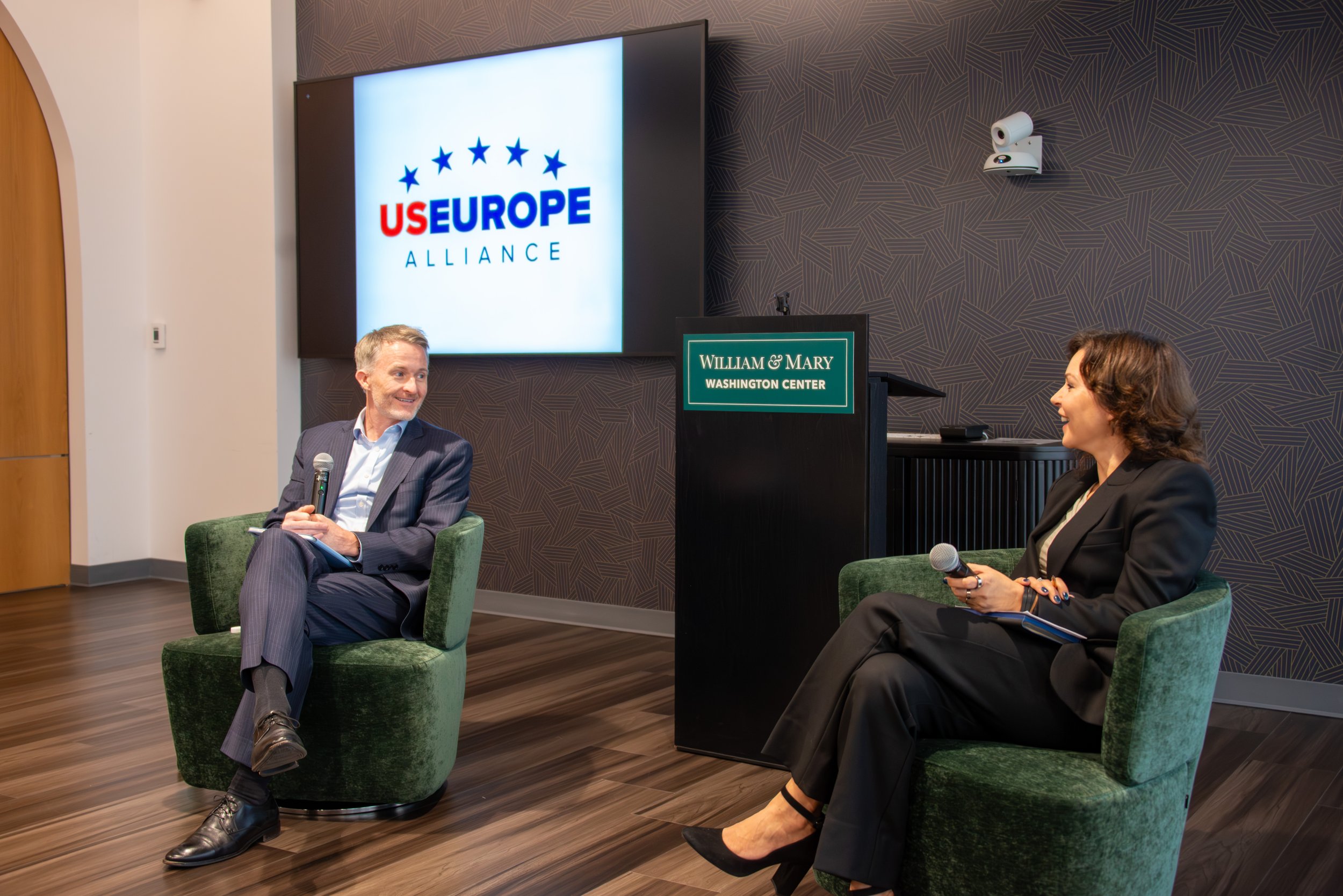
Damien Murphy, Senior Vice President, Center for American Progress, and Ivana Cvetković-Bajrović, Producer, Method Sarajevo
Day 1
In honor of all those who have made peace a lasting reality in Bosnia-Herzegovina, the US-Europe Alliance organized the multi-panel, two-day event, The Dayton Accords at 30. Held at the College of William & Mary Washington Center in Northwest DC on November 19-20, 2025, USEA convened statesmen, diplomats, journalists, and civic activists then-and-now pivotal to Bosnia’s peace and prosperity. Here’s what they had to say:
On the first day, after welcome remarks from USEA vice president Reuf Bajrović, the keynote address was delivered by H.E. Željko Komšić, Chairman of the Presidency of Bosnia and Herzegovina.
The Dayton Accords have resulted in several notable successes: refugees have returned, sovereign and functioning states have been established, economic growth continues, military capabilities have been enhanced, and individual rights are respected. These achievements have occurred despite persistent efforts by adversarial actors in Belgrade and Zagreb to destabilize Bosnia.
Nevertheless, Bosnia and Herzegovina still requires support from the transatlantic community. The broader effort to end the war led to the realization of universal, fundamental values in a post-conflict state. This accomplishment, unprecedented in many respects, has served as a model for resolving armed conflicts elsewhere.
During the Q&A session, President Komšić highlighted ongoing shortcomings. For example, young Bosnians are still required to declare their ethnic identity when applying for government identification—a practice unsuitable for a modern European state. Komšić advocates for a country of equal citizens, free from the irrational burden of categorizing individuals by language, faith, or ethnicity. The current system, which emphasizes differences rather than unity, has resulted in rising ethnic tensions. To address this, state-sponsored divisions that restrict democracy in Bosnia and Herzegovina must be eliminated.
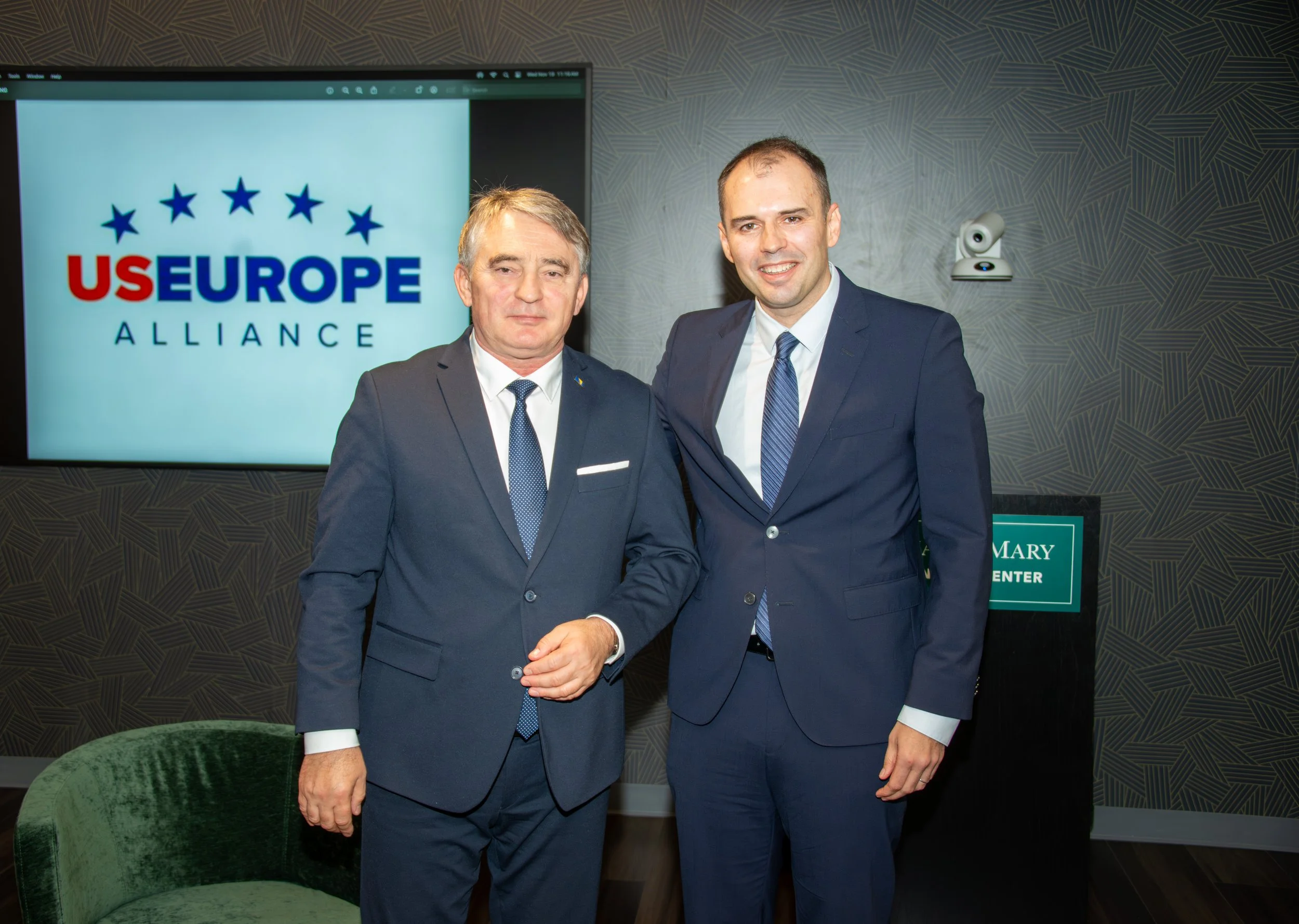
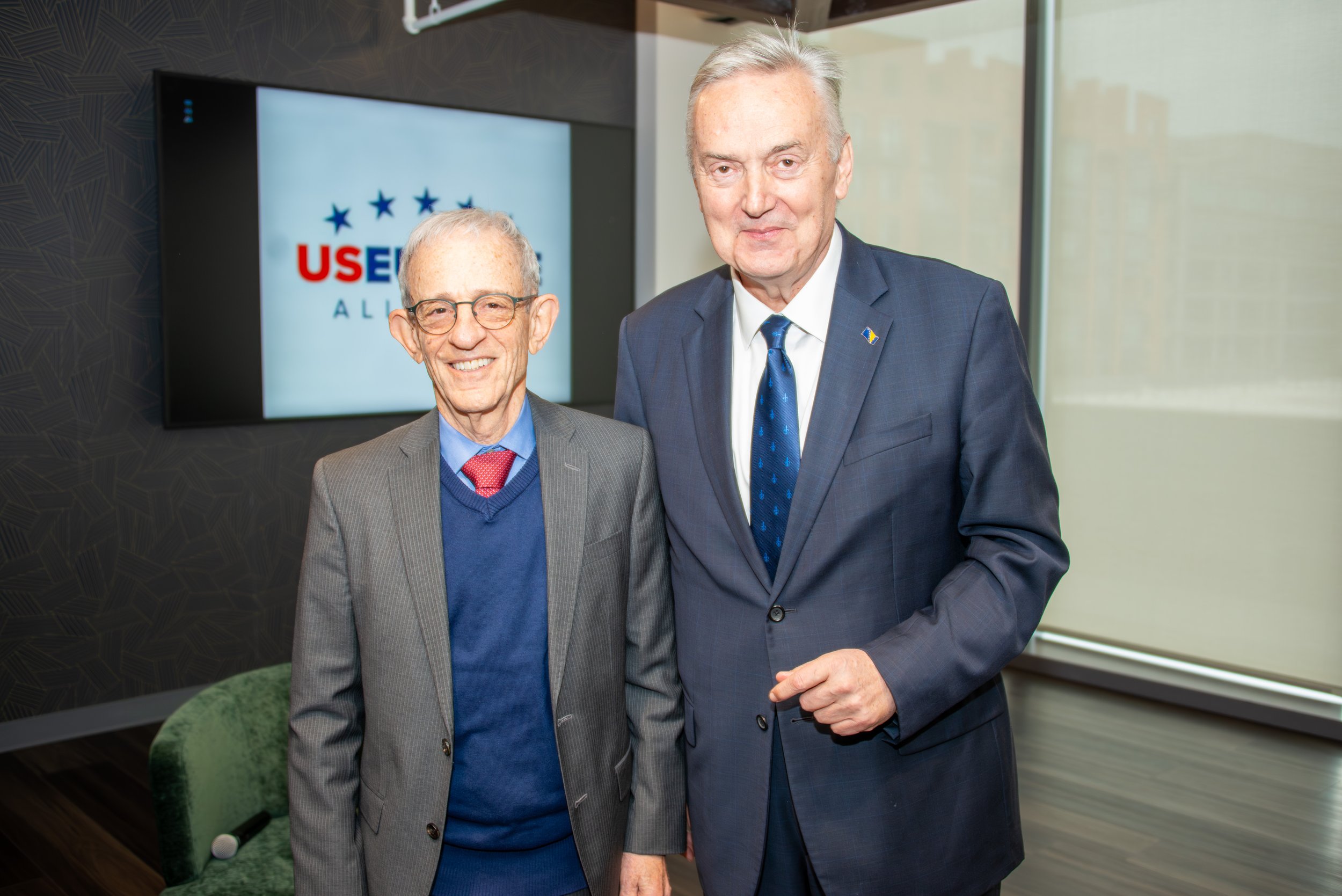
Željko Komšić, Chairman of the Presidency of Bosnia and Herzegovina, and Reuf Bajrović, Vice President, US-Europe Alliance.
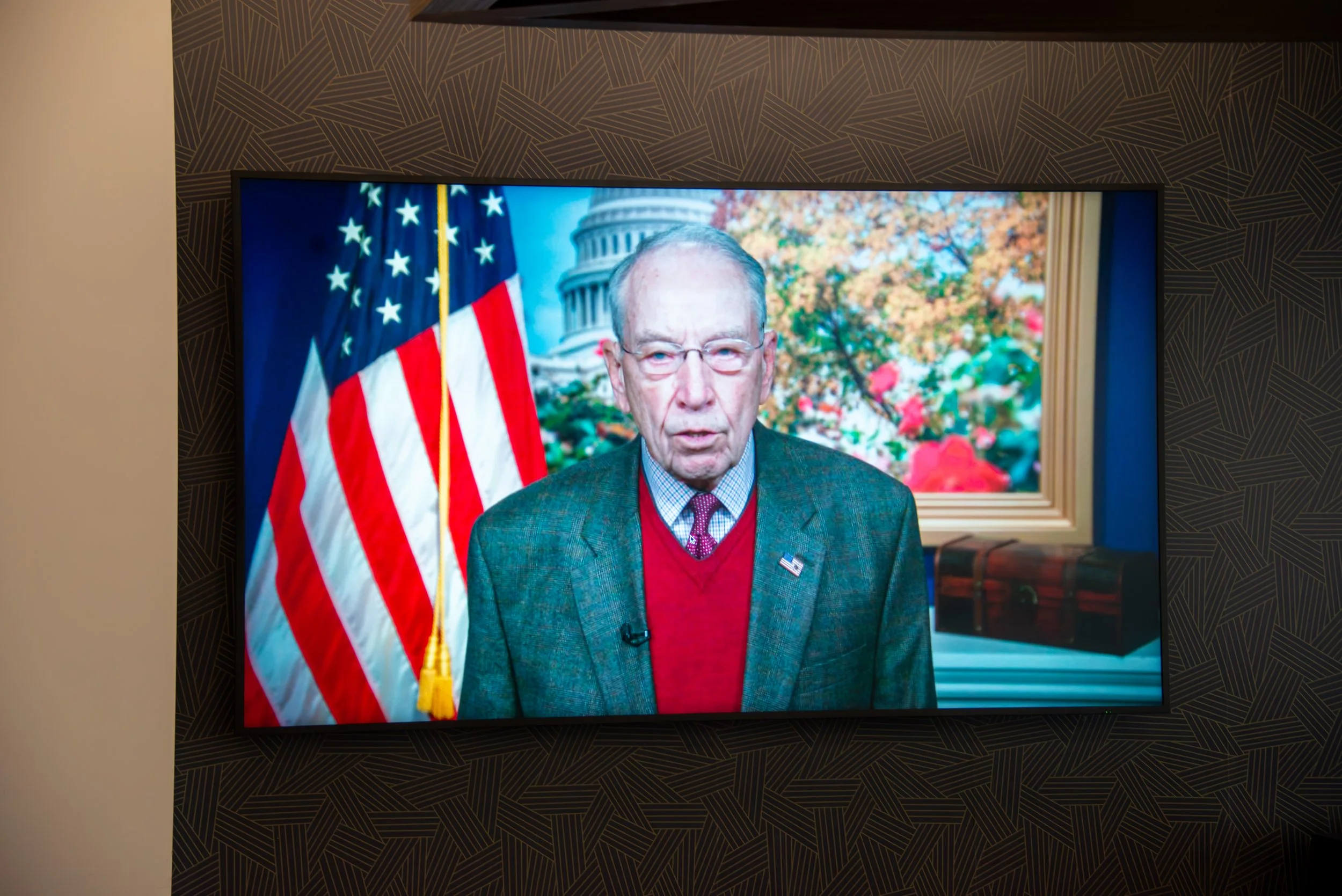
Sen. Chuck Grassley (R-IA), U.S. Senator from Iowa.
When asked about the trajectory of RS, Komšić noted that the prevailing view of Serbian history among Serbs remains largely unchanged. He considers this unsurprising, as such matters require time and sustained efforts to transform inter-ethnic relations. In the short term, he advised not to expect significant changes in perception or engagement from Belgrade. Joint initiatives to provide balanced explanations to citizens about the events of the 1992–1995 war would be useful.
Regarding the future of Dayton institutions, Komšić confirmed that plans exist, but they are diverse and divergent. He is open to discussions on any topic except the legitimacy of Bosnia and Herzegovina’s right to exist. A constructive starting point would be for all parties to genuinely listen to each other in the spirit of cooperation.
On an optimistic note, Komšić concluded by advising readiness for when a solution emerges—because it will.
Following H.E. Komšić’s speech, the honorable Senator Chuck Grassley, President pro tempore for the U.S. Senate, addressed the audience with resolute words of concern and commitment to the security and prosperity of the Bosnian people. Considering myriad US alliances and commitments, Senator Grassley called for the acknowledgment that a genuinely sustainable European security architecture is unachievable without the Western Balkans’ inclusion in transatlantic and pan-European institutions. Senator Grassley’s recognitions were categorically welcomed, reflective of his and Senator Jeanne Shaheen’s efforts via resolutions reaffirming their value and Bosnia’s sovereignty.
Damien Murphy, former Senate Foreign Relations staff director and current Center for American Progress senior vice president for national security and international policy, sat with Method Sarajevo producer Ivana Cvetković Bajrović to discuss the role of the U.S. in maintaining a lasting peace in Bosnia and Herzegovina. Murphy sees US policy in the Western Balkans being muddled of late. From a position of consistent engagement, Washington largely dropped out of the region in the immediate wake of the September 11 attacks. Since then, engagement has been inconsistent, mired by insufficient focus, Trump administration-related business investments, and the recent lifting of sanctions on RS politician Milorad Dodik, which have combined to send only mixed messages. Prospects for a course correction under the current administration appear dim, yet this remains a hope with continued U.S. Senate attention. Regrettably, the U.S. doesn’t now appear as a particularly determinative factor at the moment in the region’s trajectory. How to advocate otherwise? Murphy advised that the U.S. build on its ‘proud legacy’ in backing the Dayton Accords, an endeavor borne of humanitarian concern and respect for human rights. This should be the keystone to U.S. reengagement in the Western Balkans, a region the U.S. is ostensibly committed to supporting.
USEA president Richard Kraemer, together with Daniel Serwer, John Hopkins SAIS professor, and Paul Williams, co-founder and president of the Public International Law and Policy Group, will reflect on the run-up to the Accords and their resilience since agreed to. Both acknowledged that in getting to Dayton, the primary aim was to stop the fighting and the penultimate – a democratic government to function within this framework. Coloring West Wing debates about US involvement then – as now – were concerns as to our European partners shouldering their share of the burden. The news of the attempted genocide in Srebrenica effectively ended that discussion. That was then. Serwer and Williams agreed that today, beyond the region, Dayton’s legacy speaks to its routinely tested viability. Indeed, the Accords’ value and successes helped lead to the United Nations General Assembly recognition of the ‘Responsibility to Protect’ (R2P) in 2005.
After lunch, The Guardian world affairs editor Julian Borger and the founder of the Coalition for International Justice, Nina Bang-Jensen, considered the continuing search for justice thirty years on. Moderator Mario Mažić, co-founder of the Youth Initiative for Human Rights in Croatia, opened by inquiring as to the meaning of this ‘justice’ in present-day Bosnia. Where are the Accords in the mix? Bang Jensen reflected on Germans’ perceptions of self-culpability post-World War II; namely, with thirty percent feeling responsible for the war in 1950, increasing to sixty percent in the 60’s. To contextualize: Where are Bosnians on the matter? Borger was more explicit, maintaining that the Bosnia civil war’s outcome was fundamentally unjust, with the ethnic ‘cleansers’ getting their own largely homogenized territory as a result.
The adjudications of the International Criminal Tribunal for the former Yugoslavia (ICTY) and its sister court for Rwanda should be considered high-water marks in the international community’s pursuit of justice. Despite their achievements, Bens Jergen found the ICTY often too removed to account for the realities of politics on the ground in BiH. Borger didn’t disagree, but counseled that we need to be careful not to place too many political failures at the feet of the Court; the ICTY ‘did what it was there to do.’
Day 2
The second day of the gathering began with USEA president Richard Kraemer interviewing former High Representative to Bosnia and Herzegovina (2009 – 2021) Valentin Inzko. With over ten years in oversight of the Accords in addition to his previous diplomatic service in the Western Balkans, H.R. Inzko afforded the audience his expert assessment on Bosnia’s progress as guided by the Accords. Inzko acknowledged some of the agreement’s deficiencies, noting that the greatest challenges to implementation continue to emanate from Banja Luka. Reflecting on his decision to introduce amendments into Bosnia’s criminal code, sanctioning the denial of genocide. Having taken this step at the very end of his tenure as high representative, Inzko indicated that this was a sadly too telling a sign of how much more confidence needs to be built.
The discussion with Inzko was followed by an expert panel of long-standing Balkans watchers comprising Professor Paula Pickering, College of William & Mary; Professor Tanya Domi, Columbia University; and Foundation for the Defense of Democracies research fellow, Ivana Stradner.
Moderated by Emina Muzaferja of the New Lines Institute, panelists concurred with H.E. Komšić that perhaps the Accords’ greatest failure is its embedment of ethnicity in nearly all facets of a Bosnian citizen’s life. Domi shared that she, “Could not have been more disappointed in the OHR office [under] [Christian] Schmidt.” As an example, Domi criticized Schmidt’s rejection of public schools, a national, standardized history of the ’92-’96 war, as well as for having been especially laissez-faire as regards ethnic tensions in Mostar.
Stradner took a view of Bosnia and the region from a contemporary lens. Since Russia’s full-scale invasion of Ukraine in 2022, eyes have been on the Western Balkans as a possible flashpoint for Kremlin-provoked, deliberately distracting unrest. In this environment, Milorad Dodik has effectively employed his special brand of sycophancy between an increasingly isolated President Vladimir Putin and a newer and kindlier West Wing. (Indeed, the Russian government organized its own events for Dayton’s Thirtieth Anniversary, describing the Accords as yet another “Euro-imperialist” initiative). Stradner’s short-term outlook for regional stability was poor, seeing little genuine change in Belgrade and, disconcertingly, Russia-backed interventions in Montenegrin institutions and civic life.
Pickering’s remarks brought the audience back to the Accords. When asked as to how the Accords manifest in Bosnians’ daily lives, Pickering lamented how Bosnia’s democratic civic activists are harangued by either Serbian or Croat ultranationalists “every step of the way.” As many of their divisive tactics occur at the state level, Pickering identifies the need for “local actors to find local solutions.” Simultaneously, the national hemorrhaging of Bosnia and Herzegovina’s best and brightest to wealthier labor markets elsewhere needs to be stopped. Identified by one’s ethnicity together with related assumptions of an individual’s political allegiance, it is little wonder why increasingly ‘post-ethnic’ Bosnians are seeking futures elsewhere. Pickering concludes by arguing that remaining less cosmopolitan Bosnian citizens are arguably more susceptible to ultra-nationalists’ rhetoric.
Looking back on the Dayton Accords’ existence, panelists wished they could give better grades. According to Domi, the agreement’s biggest failure was to “deliver a cohort of leaders committed to democracy and rule of law.” Stradner identified the Accords’ greatest flaw as linked to its over-emphasis on ethnicity, thereby leaving Bosnia vulnerable to a Russian hand that aims to polarize issues around which the Kremlin and proxies generate unrest.
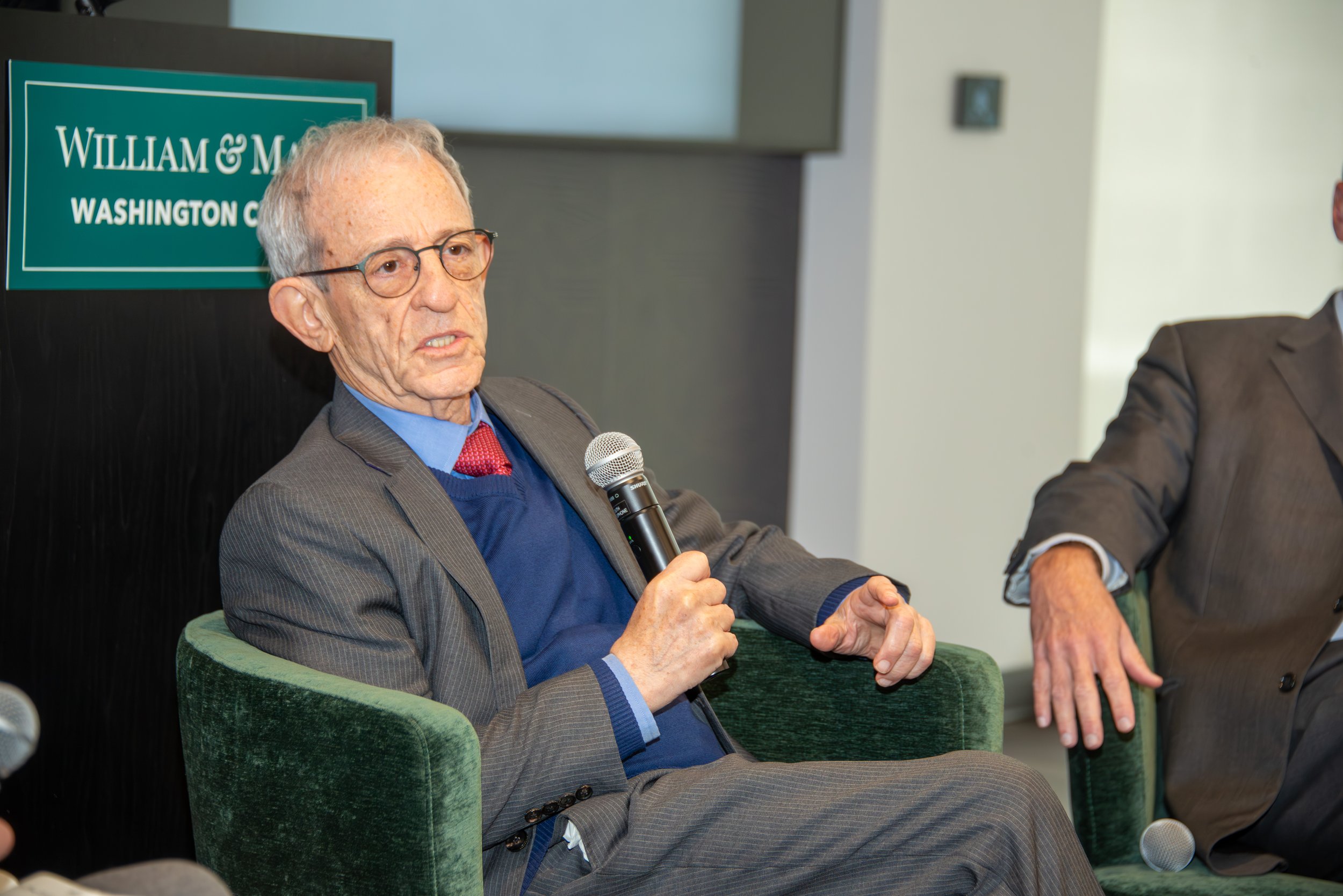
Dan Serwer, Professor, Johns Hopkins, SAIS
Dr. Serwer and Zlatko Lagumdžija, Ambassador of BiH to the United Nations

Dr. Paul Williams, President, Public International Law and Policy Group
The afternoon’s discussions opened with regional civic practitioners shining the spotlight on the reportage, coverage, and documentation of the conflict and its aftermath. Providing a Bosnian perspective was Sead Numanović, editor of the Bosnian outlet www.politicki.ba. Joining Sead was Mario Mažić, founder of the Youth Initiative for Human Rights – Croatia, and moderated by Donika Kamberi, University of Tetovo.
Thirty years on, writing and publishing about the ’92-’96 war remains fraught with challenges. Late last year, the Croatian parliament was debating legislation that defined that country’s “Homeland War” in the 1990s as just, defensive, and non-aggressive. Croats arguing otherwise may well find themselves in ultra-nationalists’ crosshairs. With foreboding developments, Numanović wisely shared that his biggest lesson from the war and its consequences is simply that, “You can’t bury the truth – this is for sure.” While a good narrative can be a powerful tool, it’s one with a marked shelf-life.
Looking at the present, Numanović called the audience’s attention to the ongoing unrest in Serbia borne of “years of [President Aleksandar] Vučić’s dishonesty. [His] MO is dead.” Championing the illumination truth brings, Numanović does see change coming in Serbia; however, it will not be fully democratic at the outset, but “transitional.”
From the Croatian perspective, Mažić concurred with Numanović’s sacred regard for the truth while expressing his fear that the accountability mechanisms for protecting it are lacking. Without them, reconciliation among future generations is hard to foresee. Towards this end, personal stories from wartime and after, “Can make cracks in the [biased] narratives that youth have been fed.” Mažić continued with his prescribed remedy, citing the need for youth throughout the region to engage directly with crucially needed space for personal responses (IE as opposed to simply receiving messages). Both agreed to ‘the sooner-the-better’ as they see increased state control of Internet-based communications and social media as “inevitable.”
The final moderated panel for the day focused on the role of arts & culture in reconciliation and memory. Cvetković Bajrović returned to guide a discussion between Andrej Nosov, founder and director of the Heartefact Foundation in Belgrade, and Maja Salkić Burazerović, actress and director hailing from the Sarajevo War Theater. Following a video presentation of the recently NYC-debuted play They Are All Gone as directed by Nosov, he affirmatively acknowledged the space that the Dayton Accords set for an open society where interpretations of the past are dynamic and in public. Indeed, Nosov noted that arts & culture has in recent years been “the only” space for several years consistently working through the Western Balkans’ past. Both Nosov and Salkić Burazerović succinctly identified the challenge of how to connect a, for example, young Serb’s understanding of the wars through tired narratives and the actual history in a way that relates to their daily lives. (Indeed).
USEA’s two-day event reflecting on the peace and stability maintained under the Dayton framework was closed with a special address from House Representative Mike Turner, representing the Ohio electoral district that hosts Dayton, the city. As such, Congressman Turner spoke of his constituency whose proximity to the historic events at Dayton Air Force Base resonates to this day. A champion of Bosnian unity and sovereignty, Turner shared his marked concern about irredentist voices that still emanate from ultranationalist corners in the country, the need for the inclusion of the Western Balkans Democracy and Prosperity Act in the FY2026 National Defense Authorization Act, and renewed international efforts to support reforms and lasting reconciliation.